A U T O P L A Y O G R A P H Y
Performing life through play
Play keeps the world larger than culture.
Hey! Hi there, I’m Imara Felkers. Welcome to my page on autoplayography.
This is what it is about:
Autoplayography is a way of exploring how, through play, the self is not only expressed but also brought into being. It is an invitation to approach life as a practice through which we can enlarge the space in which the self can come into being.
That may sound a little abstract. But it might also be an invitation to adventure. Whatever we make of phrases like ‘find your true self’, it might be true that we are never entirely finished, or fully known to ourselves. And that offers a whole different perspective. There is always something enigmatic, something still possible.
Play can bring that possibility into the world, and change how we relate to the world already around us.
The benefit is proximity. Your own life gives you immediate access to your habits, longings, memories and favourite ways of being. I find that an attractive way to live: close to one’s own life, yet open to trying and exploring what the permeability of play makes possible. For me, play is a life practice.
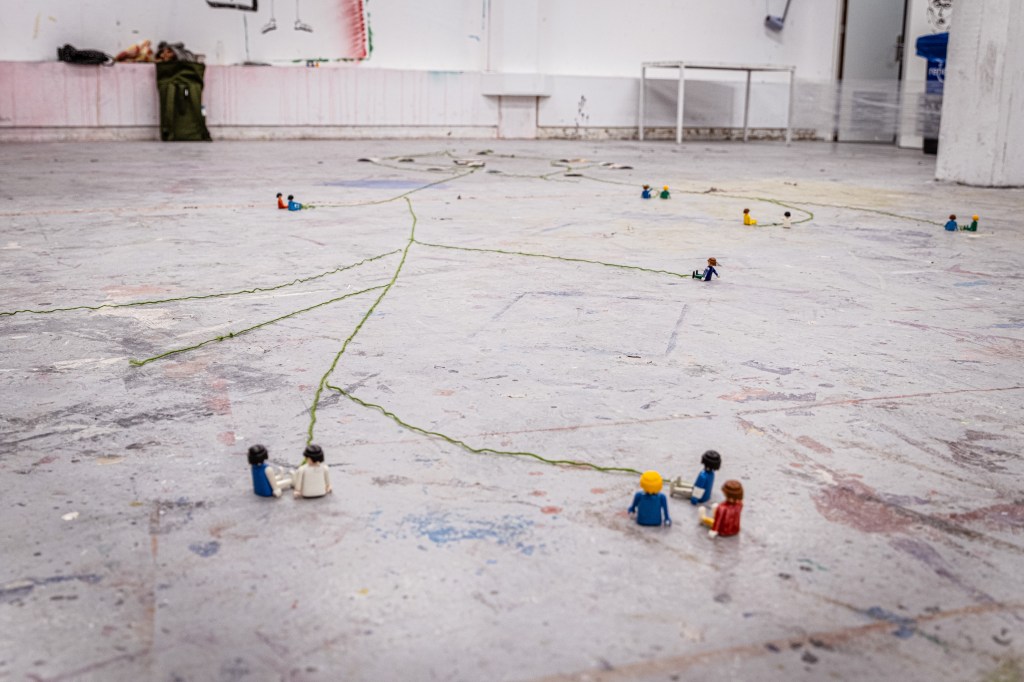
I think elements of childhood play are such a powerful place to start. What fragments of childhood play can you still remember? See these fragments as an invitation to take play seriously without making it solemn.
Want to see what this can look like?
Explore Ways to Play →