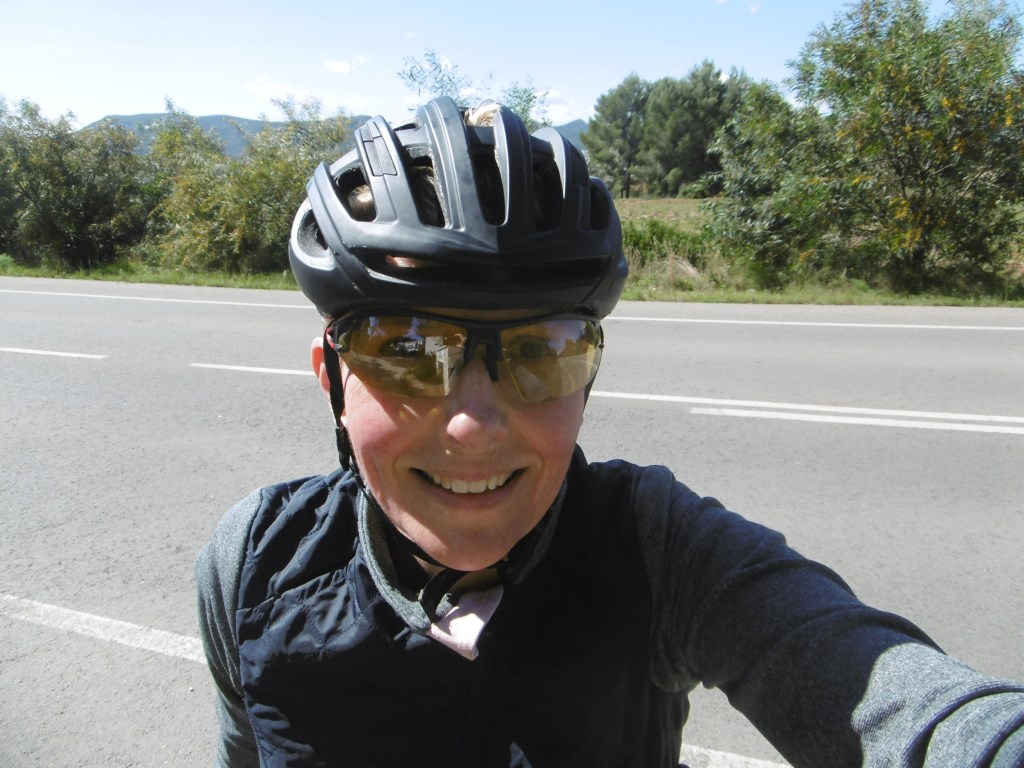
My name is Imara Felkers. I am a philosopher, and my subject is play.
In September 2025, after twenty years of teaching philosophy at HKU University of the Arts Utrecht in the Netherlands, I resigned. The decision came from a simple but profound conviction: if I really want to take play seriously as an existential part of being human, and if I really want to meet that idea rather than merely teach it, then perhaps the classroom is no longer the most suitable place for me to be.
We sold our house and moved to Sweden, turning our holiday home into the place where we actually live. “Did you have to renovate?” a friend asked. No. Everything was already there and, for the most part, it worked. So we could simply have lived in our wooden house from 1947.
But somehow that felt too much like keeping my job and remaining a philosophy teacher until retirement eventually made its entrance.
So we started breaking down walls.
We turned the living room into a large kitchen, with the vedspis, a wood-burning cooking stove, standing free of the wall. And strangely enough, this physical opening-up of the house began to feel very much like inhabiting the philosophical idea of deconceptualisation: making space by disturbing what had previously seemed settled.
Opening things up, accompanied by the rather strong sensation that you may be putting yourself in danger here, brought me exactly where I want to be: no longer only teaching the philosophy of play, but trying to practise it.
Practice What You Teach
The funny thing is that, in my first year, I did exactly what I had strongly objected to during my PhD: I behaved as if a philosopher mainly reads and writes. I wrote a lot!
The first harvest is my monograph, Autoethnography and the Philosophy of Play (Routledge, August 2026). Then there is The Paidia Principle, co-authored with Eva den Heijer: a practical handbook full of exercises, and the harvest of fourteen years of collaboration between game design and the philosophy of play (BIS Publishers, November 2026).
And in the forthcoming Play, Philosophy and Power (Routledge, 2027), I explore the force of miniatures and repetition through Marcel Duchamp’s Boîte-en-valise.
But writing is only part of what I am trying to do.
The larger question is what happens when philosophy and play are allowed to leave the page and enter everyday life.
Philosophy and Play
Perhaps I have been circling around that question for much longer than I realised. When I was nine years old, I wanted to become a professional cyclist and a philosopher. The first ambition quickly proved unrealistic. The second seemed more complicated.
At school, my teacher explained that a philosopher was ‘a man who thinks about life’.
But I already do that, I immediately realised: on my swing!
I did not particularly enjoy swinging high or fast. I preferred to sit still, suspended just above the ground. I doubt that I was consciously thinking about life. It was closer to an active form of not-thinking: a quiet attentiveness in which the world seemed both near and immeasurably large.
The philosopher pictured in my schoolbook had wild, curling hair flowing into an enormous beard. He looked rather like a lion. I remember staring at him and wondering, with mild panic: How can I become something I already am?
My childhood cycling games had a similar quality. Wearing a paper helmet I had made myself, I rode my purple Gazelle bicycle to a small hill near my school. I climbed to the top and stood there, gazing into the distance.
In my imagination, I was the road captain of Joop Zoetemelk, the most famous Dutch cyclist of my childhood. Because I knew that Joop would win without my help, I was free to remain on the hill and explore the world.
Years later, these fragments of childhood play became part of my philosophical research.
Play keeps the world larger than culture.
Through the work of Eugen Fink, I began to understand play not as an escape from reality, but as another way of entering it. Play makes us aware that we are both part of a larger cosmos and inhabitants of the cultures we create and live within. That awareness matters. It prevents us from coinciding entirely with culture, as if the world we have made were all there is.
Through play, we remain entangled with everyday life while gaining access to a larger — cosmological — perspective. I find this merciful. Play allows us to experience possibility without requiring us to leave reality behind.
This is what makes play an epistemology and us players. We have the autonomy to shift scale and perspective: to experience what might be, and who we might be, while remaining entangled with everyday life.
That became the starting point for Autoethnography & the Philosophy of Play
.
What I Am Doing Now
I am now trying to give form to what emerged from that research. Or, put differently: I am playing out the recommendations of the book.
Eugen Fink and Doreen Massey are important companions in that work, as are Julio Cortázar and Carol Dunlop, who gave me the word autonaut. I think of what I am doing partly as becoming an autonaut in my own life: moving through familiar territory on a scale of my own making, where things can be enlarged, slowed down, repeated, forgotten and found again.
I explore these questions by writing, cycling, drawing, wandering, teaching, making things and occasionally taking walls down :-).
Some of that work becomes books. Some becomes workshops, lectures and training programmes. Some becomes projects such as Wanderscope. And some of it may simply remain an experiment.
What connects them is a question I am still living rather than trying to finish:
What happens when we stop treating play as something we do alongside serious life, and begin to take it seriously as a way of knowing and being in the world?
If this story resonates with you, if you want to devise your own autonaut plan, if you are looking for a theoretical foundation for what you are already doing, or if you are curious about the ontology of play and how it might help you situate yourself more clearly in the world, explore Ways to Play and see where our paths might meet.
Or contact me.
Contact: imara@autoplayography.com
